

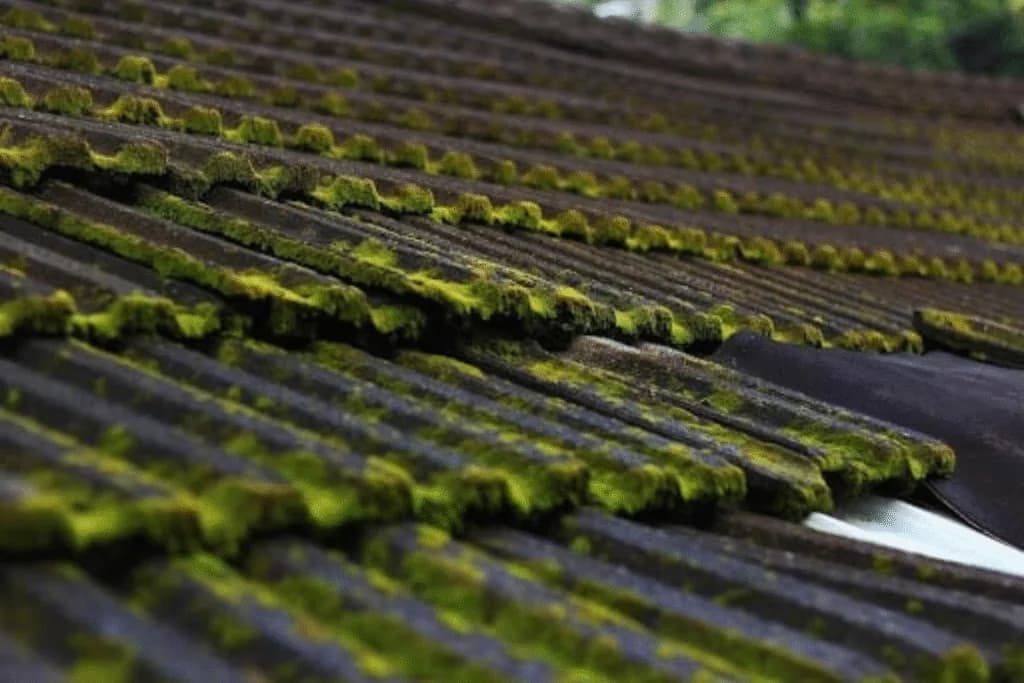
What Causes Moss to Grow on Roofs?
Moss develops in moist, shaded environments. Connecticut's seasonal rainfall and tree coverage — particularly on north-facing roof sections — create ideal conditions. High humidity, limited sunlight, organic debris accumulation, and drainage issues all contribute. The Asphalt Roofing Manufacturers Association notes that moss retains moisture, which can damage shingles and shorten the lifespan of your roof by years.
Why Is Moss Dangerous for Your Roof?
Moss penetrates beneath surfaces, with roots that lift and crack shingles while trapping moisture underneath. Consequences include water damage under shingles, shingle deterioration, wood rot, mold growth, pest attraction, and reduced thermal efficiency. Unchecked moss can shorten a roof's lifespan by up to 30%, leading to repairs that could cost thousands.
How Does Soft Washing Remove Moss Safely?
The process combines low-pressure water with a roof-appropriate cleaning solution. The solution is applied, allowed to work on the moss, and then gently rinsed away. Unlike pressure washing, this method avoids the force that can strip shingle granules or drive water beneath the roofing surface.
How Often Should You Clean Moss From Your Roof?
Frequency depends on your environment. Heavy tree cover requires cleaning every 12–18 months. Partial shade every 2 years. Open, sunny roofs every 3–4 years. Homes with visible moss patches or lifting shingles should be evaluated immediately regardless of schedule.
How Can You Prevent Moss From Returning?
Prevention strategies include trimming overhanging branches to increase sunlight, regular gutter maintenance to eliminate organic debris, installing zinc or copper strips near the ridge line, ensuring proper attic ventilation to reduce moisture, and scheduling periodic professional soft washing treatments.